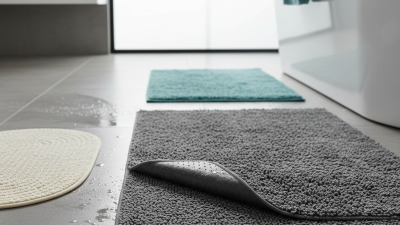
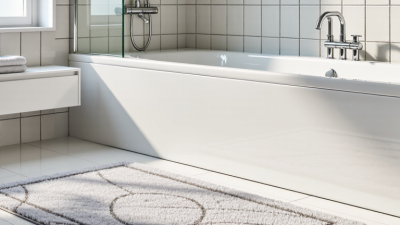
Choosing a Bathroom Carpet manufacturer in China involves more than comparing prices. A sample may look plush in a catalog but feel thin after repeated washing. On wet tile, poor backing can also shift underfoot. Small details matter: pile density, edge stitching, drying time, colorfastness, and care instructions. Ask suppliers for samples and written specifications. Request test documentation where available. Then compare the same product details across quotations. It is not glamorous. It can prevent costly surprises.
Dieter Rams, an influential industrial designer, offered a useful principle: “Good design is as little design as possible.” Applied to Bathroom Carpet, that means prioritizing dependable grip, easy cleaning, and comfort over decorative claims alone. Rams was not a bathroom-carpet specialist; his design principle is relevant, but it should not replace product evidence. A useful manufacturer comparison should examine material options, backing construction, customization, minimum order quantities, lead times, and quality checks. Ask how the supplier controls consistency between samples and bulk production. Get the answer in writing.
There is no single best factory for every buyer. A hotel project may value durability and repeatable colors; a small retailer may need flexible order sizes and distinctive designs. Public company profiles can be incomplete, and polished product photos reveal little about production control. That deserves a second look. The sections ahead compare Chinese manufacturers through practical criteria, helping buyers build a shortlist and verify claims before placing an order.
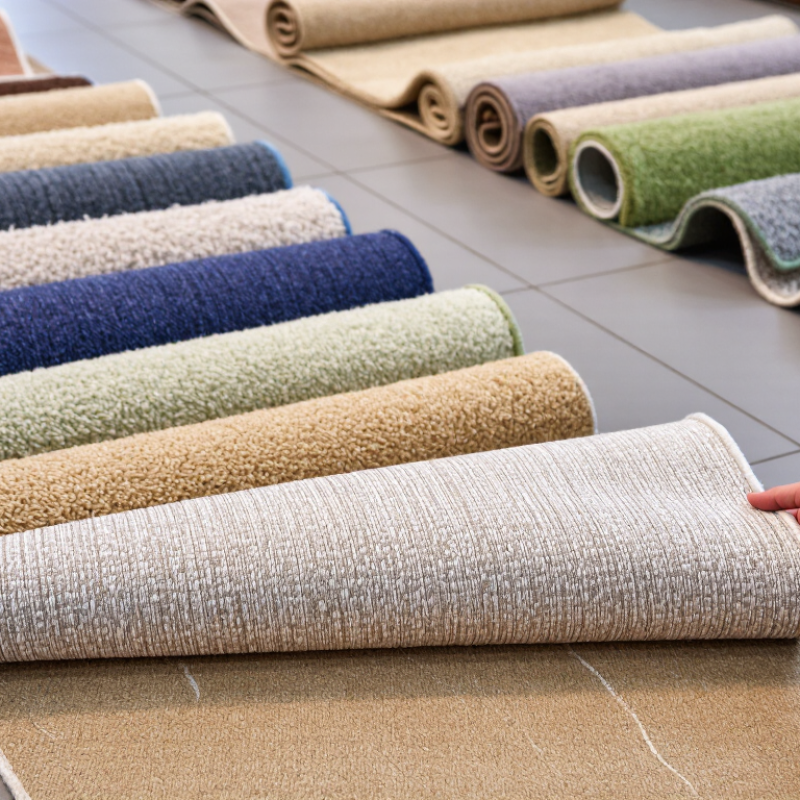
A bathroom carpet manufacturer in China is more than a workshop that cuts fabric and adds a backing. A dependable producer can explain fiber content, pile height, backing materials, edge finishing, and care instructions in clear terms. Ask how each batch is checked for shedding, color transfer, and grip on wet tile. Request samples, then wash and test them at home; a soft surface can still curl at the corners. That detail is easy to miss.
Grand View Research estimated the global carpets and rugs market at USD 51.71 billion in 2022. This figure covers the wider category, not bathroom carpets alone, but it shows why material consistency and product differentiation matter to manufacturers. For buyers, factory capability is best judged through documented specifications, repeatable sample quality, and realistic lead times—not catalog photos alone. Some suppliers may have strong equipment but limited testing records. That deserves a second look.
Tips: Ask for a product data sheet and a batch inspection record. Check whether the backing stays flat after washing, and confirm the stated dimensions against a physical sample. A clear answer beats a polished brochure.
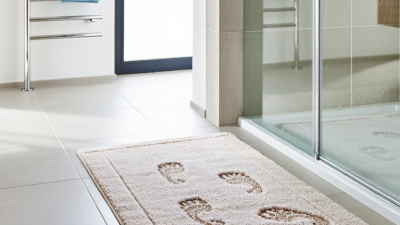
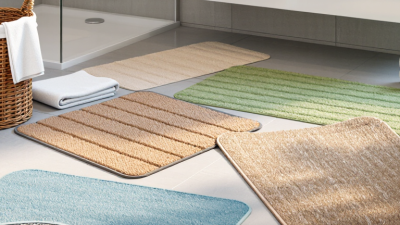
Chinese bathroom carpet manufacturers produce several practical styles, with material and construction shaping how each one performs. Microfiber and chenille mats feel soft underfoot and dry relatively quickly when airflow is good. Cotton versions absorb water well, though they may take longer to dry in humid rooms. Some factories also make memory-foam mats with a cushioned core and a textile surface. Details matter.
Shapes range from compact rectangles beside a shower to contour mats designed to fit around a toilet base. Manufacturers may offer tufted or woven surfaces, different pile heights, and backing options such as non-slip PVC or rubber. A backing’s grip can vary on wet tile, so product specifications alone are not enough. Not always. Buyers should check care labels, stitching, and wash-test results before choosing a style for frequent use.
Tips: Match the mat to the floor and drying conditions. For a small, poorly ventilated bathroom, choose a thinner, washable design and hang it after use. Test it first. Ask suppliers about shrinkage, colorfastness, and backing durability after repeated washing; these details can matter more than a plush first impression.
Bathroom carpets begin with fiber selection. Manufacturers commonly use cotton, polyester, or blended yarns, then form the pile through tufting or weaving. A dense pile feels plush, but it can hold water longer. A lower pile dries faster, though it may feel less cushioned. Backing is added to limit slipping; it should remain flexible and resist cracking after washing.
Production checks start at the yarn and continue through finishing. Technicians inspect pile height, backing coverage, dimensions, and loose fibers. Colorfastness can be assessed with ISO 105-X12 rubbing tests, while laundering procedures can follow ISO 6330. These tests provide repeatable comparisons, not a promise that every mat will behave identically in a damp bathroom. Small details matter. A curled corner or thin patch can change how a carpet feels underfoot.
The market context is substantial: Grand View Research estimated the global home textiles market at US$124.3 billion in 2023. That figure includes far more than bathroom carpets, so it should not be treated as a category-specific sales measure. Buyers and inspectors can request test conditions, wash-cycle results, and batch inspection records rather than relying only on a soft hand feel. One limitation remains: laboratory tests cannot fully reproduce daily splashes, poor ventilation, or uneven floors. A product may pass testing and still need better real-world evaluation.
Approximate standard moisture-regain values for selected textile fibers, expressed as a percentage of dry fiber weight.
Cotton and wool generally retain more moisture within the fiber than synthetic fibers such as polyester and polypropylene. These reference values describe fiber moisture regain—not the water-absorption performance of a finished bathroom carpet. Manufacturers assess finished products separately, including absorbency, colorfastness, dimensional stability, and backing adhesion.
Who Are the Top Bathroom Carpet Manufacturers in China?
Who Are the Leading Bathroom Carpet Manufacturers in China?
Leading suppliers are best assessed by production control, not catalogue size. Check whether one facility handles yarn sourcing, weaving or tufting, dyeing, backing, and final inspection. A thick, soft pile may look premium yet shed after repeated washing. Ask for wash-cycle, colorfastness, absorbency, and backing-slip test records, plus recent independent audit documents. These details are more useful than a broad “premium quality” claim.
Textile Exchange’s Materials Market Report 2024 estimates global fiber production reached 124 million tonnes in 2023, with polyester accounting for about 57%. This is not a bathroom-carpet market statistic or a ranking of Chinese factories. It does show why buyers should verify fiber content and recycled-material claims through batch records. Request samples from the actual production line, confirm order quantities and lead times in writing, and compare tolerances for size and color. Small discrepancies happen. Repeated ones matter.
Tip: Wet the mat’s underside and test it on the intended floor; grip can differ between tile and polished stone. Ask for care instructions and a replacement policy before approving production. Supplier websites may not clearly disclose subcontracting, so request the production address and a written list of process steps.
To compare Chinese bathroom carpet manufacturers, request the same sample specifications from each supplier. Check fiber type, pile weight, backing material, absorbency, drying time, and dimensions. A soft surface feels appealing, but a slippery backing can be a practical problem on wet tile. Ask for test results on colorfastness, washing durability, and slip resistance, then confirm the testing method and date. Compare production lead times, minimum order quantities, packaging, and how defects are handled. A polished sample can still hide batch variation. One sample is not enough.
Market context helps, but it is not a quality score. Grand View Research valued the global carpets and rugs market at USD 51.8 billion in 2023 and forecast 4.2% annual growth from 2024 to 2030. The report covers a broad product category, not bathroom carpets alone. Use it to understand demand, not to rank factories. Request recent production photos, quality-control records, and a pre-shipment inspection plan. If a supplier cannot explain how its measurements were taken, pause and verify.
Tips: Send a short, written specification sheet to every candidate. Test samples after several washes, and note whether edges curl or backing cracks. Ask for a small trial order before scaling up. It takes extra time. Still, comparing identical products gives buyers a clearer view of workmanship, communication, and consistency.
Use this evidence-based comparison checklist to assess suppliers. It does not rank or identify individual companies; specifications and performance should be verified for each product and order.
| Comparison Dimension | What Buyers Should Compare | Useful Evidence to Request | How to Assess the Response |
|---|---|---|---|
| Product construction | Surface material, pile or loop construction, backing material, and edge finishing. | Product specification sheet, material declaration, and a physical sample. | Check that the stated construction matches the sample and the intended bathroom use. |
| Material options | Available face and backing materials, such as cotton or polyester surfaces and rubber or thermoplastic backing options. | Fiber-content details and backing-material information for the exact model. | Compare material composition rather than relying on broad descriptions such as “soft” or “non-slip.” |
| Dimensions and tolerances | Available shapes and sizes, finished dimensions, and permitted measurement variation. | Dimensioned product drawings and written size tolerances. | Confirm the finished size, not just the nominal size, and check a production sample against the specification. |
| Absorbency and drying | Water uptake and drying performance under a defined test method and set of conditions. | Test method, sample details, test results, and any care or drying instructions. | Compare results only when the products were tested using comparable methods and conditions. |
| Backing grip and floor suitability | Grip performance on the floor types relevant to the intended market, plus any surface-care limitations. | Test information or documented evaluation for the specific backing and stated floor types. | Do not treat “non-slip” as a guarantee; check the product instructions and test conditions. |
| Wash and care performance | Permitted washing method, temperature, drying method, and expected changes after repeated care. | Care label, wash-test information, and before-and-after sample measurements or photos. | Confirm the care instructions suit the target market and the intended household use. |
| Color and appearance consistency | Color matching, pile appearance, edge finish, and consistency between samples and bulk production. | Approved color standard, pre-production sample, and documented inspection criteria. | Approve a reference sample and define acceptable color and workmanship variation in writing. |
| Quality control | Incoming-material checks, in-process inspection, final inspection, and defect classification. | Quality-control plan, inspection checklist, and sample inspection report. | Look for clear inspection stages, measurable acceptance criteria, and traceable records. |
| Production capability | Available construction methods, order capacity, production schedule, and ability to handle repeat orders. | Written production plan, capacity details for the requested product, and realistic lead-time milestones. | Evaluate capability against the specific design and order quantity rather than general claims. |
| Customization and packaging | Custom size, color, labeling, packaging, and carton-marking options. | Artwork proof, packaging specification, sample label, and written customization limits. | Confirm all approved details appear in the purchase specification before production. |
| Compliance documentation | Documents relevant to the destination market, product composition, and buyer requirements. | Current reports or declarations that identify the tested product and applicable requirements. | Check document scope, dates, issuing organization, and whether the tested item matches the offered product. |
| Commercial terms and communication | Quotation scope, minimum order quantity, payment terms, delivery terms, sample charges, and response clarity. | Itemized quotation and written confirmation of all agreed commercial terms. | Compare quotations on the same product specification and delivery basis; clarify exclusions before ordering. |