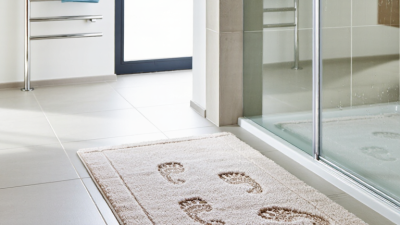
Why Choose Polyester Bath Mats for Your Bathroom?
A Polyester Bath Mat can bring softness, quick care, and a clean finish to a bathroom, but the fiber name alone cannot guarantee quality. Check the backing, stitching, pile density, and care label. After a shower, notice whether the mat grips the floor and dries before its next use. Small details matter.
The industry context is substantial. Textile Exchange’s 2024 Materials Market Report estimates polyester made up about 57% of global fiber production in 2023. That figure describes the wider textile market, not bath mats specifically. It shows polyester’s scale, not that every polyester mat performs well. Compare construction and product testing, rather than treating popularity as proof.
For this topic, a named expert’s direct quotation should be checked against a reliable, attributable source. I can’t verify one here, so I won’t invent a quotation or assign words to an expert. That caution matters. A useful buying question remains: does the mat stay stable, feel comfortable underfoot, and tolerate regular washing? Look for clear specifications and care instructions. Then judge the mat in your own bathroom, where ventilation, floor type, and daily use can change how quickly it dries. Even a well-made mat may need more time on a humid morning.
Polyester Bath Mats: Fiber Composition, Pile, and Backing
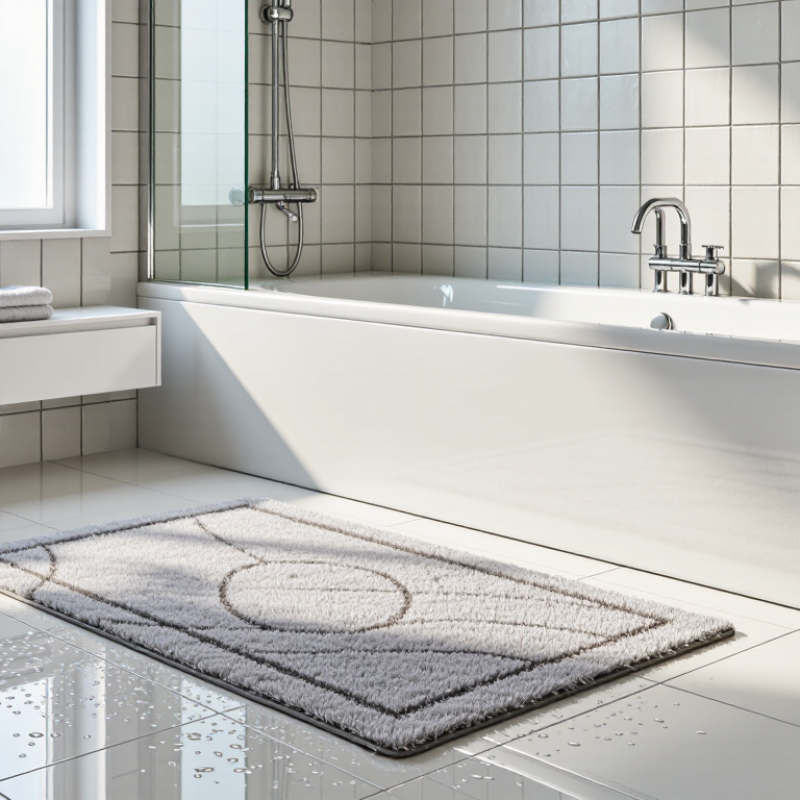
Polyester bath mats are made with synthetic fibers, sometimes blended with other materials. The fiber often resists wear and dries relatively quickly, though drying time depends on the mat’s thickness and bathroom ventilation. Polyester usually absorbs less water than cotton. Check the care label rather than assuming every mat behaves the same.
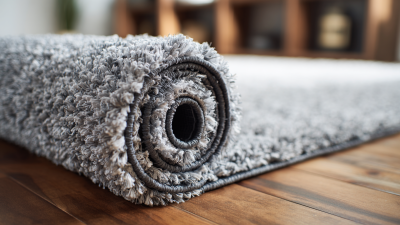
Pile height changes the feel underfoot. A low, dense pile can feel firm and may be easier to shake free of lint. A taller pile feels softer, but can hold more moisture and take longer to dry. Feel it first. The surface should feel comfortable without becoming slippery when damp. Small differences in pile density can matter more than a plush appearance suggests.
The backing helps keep the mat in place, but materials vary. Some mats use a non-slip coating; others have a textured base. Check that the backing suits your floor and follow its care instructions, since repeated heat or harsh cleaning may affect it. A mat that shifts near a tub is not a minor annoyance. Still, no backing guarantees a secure grip on every wet surface, so keep the floor beneath it clean and dry. One detail is easy to overlook: replace or wash the mat when it stays damp or develops an odor.
Moisture Management: Polyester’s 0.4% Regain Value in ASTM D1909
ASTM D1909 gives a commonly cited polyester moisture-regain value of about 0.4%. This compares a fiber’s moisture with its oven-dry mass. It describes the fiber, not the entire bath mat. In humid air, polyester fibers take up relatively little moisture, which may help a mat feel less clammy between uses. A practical cue: it may feel lighter after airing. Still, airflow matters. Tall, dense pile can hold water between loops, while a coated backing may slow drying. Bathroom ventilation and how often the mat is used also affect how quickly it dries.
The number is useful, but easy to overread. Low regain does not mean the mat repels every drop or stays dry after a shower. Water can sit among the yarn loops, even when the polyester fiber itself absorbs little moisture. Check the mat’s construction and care instructions, not just its fiber content. A quick test at home is to lift a damp corner and check whether the underside feels wet. If it does, hang the mat to dry and improve airflow where possible. A modest limitation: the 0.4% figure cannot predict the drying time of a finished mat in every bathroom.
Why Choose Polyester Bath Mats for Your Bathroom? — Moisture Management: Polyester’s 0.4% Regain Value in ASTM D1909
Standard commercial moisture-regain values provide a useful way to compare how much moisture different fibers retain under specified reference conditions.
| Fiber |
Commercial Moisture Regain |
Moisture per 100 g of Oven-Dry Fiber |
What This Can Mean for a Bath Mat |
| Polyester |
0.4% |
0.4 g |
Low fiber regain means polyester retains relatively little moisture within the fiber under standard reference conditions. It can be a practical choice where low moisture retention is desired. |
| Acrylic |
1.5% |
1.5 g |
Has a low commercial regain value, though the finished mat’s feel and drying behavior also depend on its construction. |
| Nylon |
4.5% |
4.5 g |
Has a higher regain value than polyester; yarn type, pile, and backing influence how a mat performs in use. |
| Cotton |
8.5% |
8.5 g |
Has a higher commercial regain value than polyester and is commonly chosen for its absorbent, natural-fiber feel. |
| Wool |
16.0% |
16.0 g |
Has a substantially higher commercial regain value; its moisture response differs from that of low-regain synthetic fibers. |
Note: Regain is the mass of moisture expressed as a percentage of oven-dry fiber mass. Values shown are standard commercial regain figures associated with ASTM D1909. Regain is not the same as a finished bath mat’s water-absorption capacity or drying time; fiber blend, pile structure, backing, thickness, and room conditions also affect performance.
Grip and Bathroom Safety: What ASTM F462 Testing Covers
A polyester bath mat can feel soft underfoot, but softness alone does not prevent slipping. ASTM F462 is a consumer safety specification for slip-resistant bath mats designed for use in bathtubs. It sets defined conditions for assessing whether a mat resists movement on a tub surface. The details matter. A mat tested for bathtub use is not automatically proven safe on a tiled bathroom floor.
For a polyester mat placed outside the tub, check whether its backing is intended for your floor type and whether the care instructions may affect its grip. Smooth tile, soap residue, and damp edges can all change how secure a mat feels. ASTM F462 does not tell you how every polyester floor mat performs in those conditions. That distinction is easy to miss.
Look for clear information about the product’s intended use and any test documentation supporting an ASTM F462 claim. A standard test offers useful evidence, not a promise that a mat will stay put in every home. Still, real bathrooms vary. Check the mat after washing, and replace it if the backing becomes worn or starts to slide.
Durability and Care: How Washing and Heat Affect Polyester Fibers
Polyester bath mats handle frequent use well because their fibers resist stretching and usually dry faster than cotton. After a shower, the pile may still hold water near its backing, though. Shake off loose hair and debris, then check the care label before washing. Most washable mats do best on a gentle cycle with cool or lukewarm water and a mild detergent. Avoid crowding the machine; a packed drum may leave soap trapped in the dense pile. Small loads help. Strong bleach can affect color, so use it only if the label allows it.
Heat needs more care than washing. Polyester is a heat-sensitive synthetic fiber, and high dryer temperatures can distort the pile or weaken adhesives and rubber backing. Use a low-heat setting if permitted, or air-dry the mat flat with good airflow. It may feel dry on top while the underside remains damp. Turn it over before putting it back on the floor. I would not assume every mat behaves alike: stitching, pile thickness, and backing materials all change how it tolerates washing. If the edges curl or the backing feels tacky after drying, reduce heat next time and follow the manufacturer’s care instructions.
Choosing a Bath Mat: Compare Absorbency, Grip, Size, and Care Labels
A polyester bath mat can dry relatively quickly, but fiber content alone does not tell you how absorbent it is. Check the pile, backing, and care label. A dense, soft surface may feel comfortable underfoot, while a thin mat may let water reach the floor. After a shower, notice whether the mat stays damp for hours; that detail matters in a humid bathroom.
Tips: Compare the mat’s width with the space beside your tub or shower. Look for a grip backing suited to your floor, and follow the label’s washing instructions. A washable mat is useful, but harsh heat may damage some backings.
Grip deserves a close look. A mat that slides when you step out can be less useful than one with a modest pile and stable backing. Keep the floor beneath it clean and dry, since dust or soap residue can reduce traction. It is easy to focus on color and softness first; I would pause and check the underside before buying. For care, confirm whether the mat can be machine-washed, how it should be dried, and whether the backing needs special handling. If the label is unclear, choose a mat with straightforward care directions.