China’s bathroom textile sector is expanding beyond low-cost, basic designs. The National Bureau of Statistics of China reported RMB 13.09 trillion in online retail sales of physical goods in 2023. This figure shows how digital purchasing now influences supplier discovery and product comparison.
Bathroom Floor Mats remain practical products, but buyers increasingly examine absorbency, drying speed, anti-slip backing, and washing durability. Grand View Research’s bathroom mats market analysis highlights home improvement, hygiene, and comfort as important demand drivers. These trends matter for importers selecting Chinese manufacturers. A colorful sample is not enough. The backing should remain stable on damp tile, while the pile should recover after repeated washing. Small details often decide customer complaints.
This guide evaluates leading Chinese suppliers through manufacturing experience, material options, quality systems, customization, minimum order quantities, and export readiness. Useful evidence may include factory audits, batch inspection records, laboratory test reports, and documented customer references. ISO 9001 procedures can support consistency, while OEKO-TEX Standard 100 certification may help verify tested textile safety claims. However, certification scope must be checked carefully. It may cover one product, not an entire factory.
UN Comtrade data can help buyers review China’s international textile trade patterns, although bathroom mats may appear within broader product classifications. That limitation deserves attention. No supplier shortlist is perfect. Samples can perform well while mass production differs. A reliable sourcing process therefore combines site verification, written specifications, pre-shipment inspection, and realistic testing. This guide aims to make those decisions clearer, more measurable, and less dependent on polished catalogs.
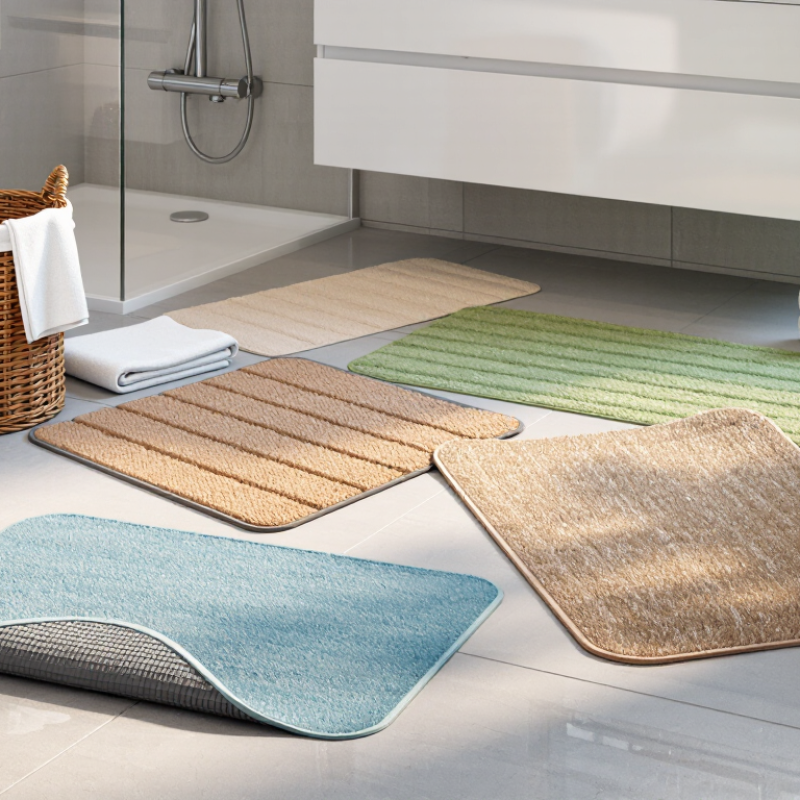
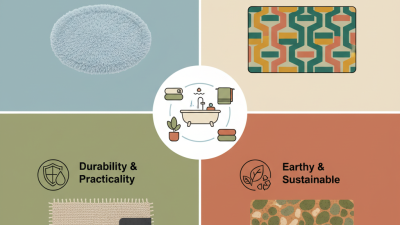
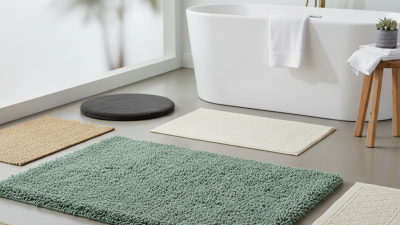
Chinese bathroom floor mat suppliers offer several practical types for different home and commercial settings.
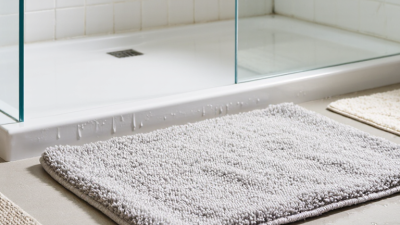
Microfiber mats absorb water quickly and feel soft under bare feet.
Chenille versions use thick, tufted yarns that create a plush surface and hide small splashes.
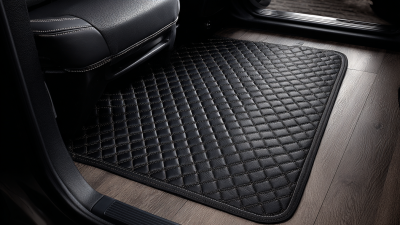
PVC and TPE mats provide a firmer base, drainage holes, and easier cleaning.
They often suit shower entrances, rental properties, and busy public washrooms.
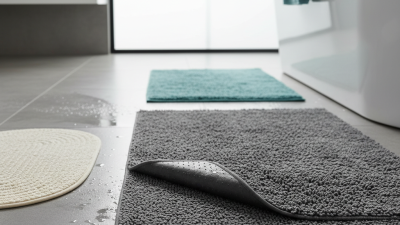
Rubber-backed mats improve floor grip when the backing has evenly spaced channels. However, poor ventilation may trap moisture underneath.
Memory foam mats feel comfortable, but their dense cores can dry slowly after repeated washing.
Diatomite-style mats offer a hard, mineral surface and quick moisture release.
Bamboo mats look natural and keep feet away from wet tiles, although they need careful drying to prevent odor or warping.
No single material wins every bathroom.
Experienced buyers usually request samples before placing larger orders.
Check edge stitching, backing adhesion, colorfastness, and the mat’s response after several wash cycles.
Ask suppliers for absorbency data, slip-resistance test results, material details, and production inspection records.
Packaging also matters; compressed mats may arrive with creases that need time to relax.
A supplier’s answer should be clear and consistent.
If specifications change between the sample and quotation, pause and verify them.
Small details matter.
Inspect the underside after use, not only the attractive top surface.
China Top Bathroom Floor Mats Suppliers Guide
Key Features to Evaluate in Bathroom Floor Mats
A reliable bathroom floor mat should absorb water quickly and dry without a musty smell. Check the fiber density, surface texture, and moisture retention after repeated use. Microfiber often feels soft, while cotton can provide a familiar, heavier touch. However, softness alone proves very little.
The backing needs firm grip on smooth, wet tiles. Look for stable rubber or thermoplastic backing that resists curling at the edges. Press each corner flat, then test the mat after washing. A mat that shifts beside a shower creates a genuine safety concern. Size also matters. Measure the clearance beneath doors before ordering large models.
Durability requires more than attractive samples. Ask suppliers for wash-cycle results, colorfastness data, and material specifications. Inspect stitching, edge binding, and backing adhesion in person or through detailed samples. A thick mat may feel luxurious, yet it can dry slowly in a poorly ventilated bathroom. That trade-off is easy to miss. Suppliers should explain production controls, inspection procedures, and packaging protection clearly. Be cautious when test documents lack dates, methods, or measurable results. Even a good evaluation can be incomplete if it ignores household habits. Frequent washing, pets, and hard water may expose weaknesses sooner than showroom testing.
| Evaluation Dimension | Common Product Data | Recommended Verification Points | Why It Matters in a Bathroom | Useful Test or Document |
|---|---|---|---|---|
| Fiber or Surface Material | Cotton, polyester microfiber, polyamide, PVC, TPR, and blends are commonly used. Cotton and microfiber are typically selected for absorbency; PVC and TPR are commonly used for water-resistant or quick-drying constructions. | Confirm the exact fiber composition, yarn type, surface construction, and whether the material is recycled or virgin. | Material selection affects absorbency, drying speed, softness, durability, odor retention, and cleaning requirements. | Fiber-content declaration, technical data sheet, and material composition test. |
| Surface Weight | Textile bathroom mats commonly fall within approximately 500–2,000 g/m², depending on pile height and construction. | Compare surface weight together with thickness and pile density; a higher GSM value alone does not prove better performance. | Surface weight influences hand feel, water-holding capacity, drying time, shipping weight, and perceived quality. | Measured GSM report using a representative production sample. |
| Pile Height and Density | Common pile heights are approximately 5–25 mm. Low-pile designs are generally easier to clean, while higher piles feel softer. | Check pile height tolerance, tuft density, shedding resistance, and whether the pile remains upright after washing. | Pile construction affects comfort, drying time, cleaning accessibility, and the risk of flattening under repeated use. | Product specification sheet, dimensional inspection, and wash-cycle comparison. |
| Absorbency | Cotton and microfiber designs are commonly marketed for water absorption. Actual performance varies with fiber type, finish, and construction. | Request a defined test method, sample conditioning procedure, contact time, water volume, and result calculation. | Effective absorption helps reduce water transfer from the shower or bath area to surrounding floors. | Laboratory absorbency report with test conditions clearly stated; avoid relying only on marketing claims. |
| Drying Performance | Quick-drying performance depends on fiber, thickness, ventilation, humidity, and backing design. No single universal drying-time standard applies to all bath mats. | Compare drying time under the same temperature, humidity, water load, airflow, and hanging or flat-drying conditions. | Faster drying can help limit persistent dampness, unpleasant odor, and microbial growth caused by poor maintenance conditions. | Controlled comparative drying test and care instructions. |
| Backing Material | Common backing materials include PVC, TPR, latex, polyester coating, and woven or non-coated constructions. | Check backing coverage, odor, flexibility, cracking resistance, transfer of color or coating, and compatibility with the intended floor. | The backing influences stability, water resistance, floor protection, flexibility, and long-term durability. | Backing material declaration, aging test, and visual inspection after washing or flexing. |
| Slip Resistance | Slip performance depends on floor type, moisture, contamination, mat movement, backing pattern, and applied load. There is no universal pass value for every bathroom floor mat. | Test on representative dry and wet surfaces, including ceramic tile, porcelain tile, vinyl, and stone where relevant. | A stable mat can reduce unwanted movement near wet areas, but it should not be treated as a substitute for a properly maintained floor. | Supplier slip-resistance report stating the test standard, surface, wetting condition, angle or friction value, and test load. |
| Dimensional Stability | Common retail sizes include approximately 40 × 60 cm, 50 × 80 cm, 60 × 90 cm, and 80 × 120 cm. | Set acceptable length, width, squareness, and shrinkage tolerances before production. Confirm whether dimensions are measured before or after washing. | Stable dimensions improve fit around toilets, vanities, tubs, and shower entrances and reduce customer complaints. | Pre-production sample, final inspection report, and wash-shrinkage measurement. |
| Colorfastness | Performance should be evaluated for washing, water, rubbing, perspiration where applicable, and light exposure. | Specify the required color-change and staining grades under the selected test method and fabric composition. | Good colorfastness helps prevent fading and dye transfer onto light-colored floors, towels, or clothing. | Colorfastness test report using an applicable ISO or AATCC method. |
| Washability | Many textile mats are labeled machine washable, but washing temperature, cycle, detergent, drying method, and backing type vary by product. | Confirm the recommended washing temperature, maximum spin speed, drying method, number of tested cycles, and post-wash appearance. | Clear and validated care instructions help maintain absorbency, shape, backing adhesion, and surface appearance. | Care label, wash-cycle test, dimensional-change result, and post-wash photographs. |
| Edge and Seam Construction | Common constructions include overlock edges, bound edges, heat-sealed edges, and molded edges for some PVC or rubber products. | Inspect stitch density, edge coverage, loose threads, corner strength, delamination, and fraying after repeated washing. | Strong edges reduce unraveling, deformation, and premature product failure in high-use areas. | Sewing specification, visual inspection standard, and seam-strength or durability test where applicable. |
| Odor and Chemical Control | Odor may originate from dyes, finishes, adhesives, latex, PVC, packaging, or volatile substances released during storage. | Request restricted-substance testing appropriate to the destination market and verify that adhesives and coatings are included in the assessment. | Lower chemical odor improves consumer acceptance, especially in small, poorly ventilated bathrooms. | REACH-related restricted-substance test where applicable, material safety data, and documented odor inspection. |
| Safety and Restricted Substances | Requirements depend on the destination country and the materials used. Testing may cover dyes, heavy metals, phthalates, formaldehyde, and other restricted substances. | Match the test scope to the importing market, product composition, packaging, and any customer-specific chemical restrictions. | Compliance reduces regulatory, recall, and marketplace risks and supports responsible sourcing. | Independent laboratory report, supplier declaration, and batch or lot traceability documents. |
| Packaging and Moisture Protection | Individual polybags, paper sleeves, cartons, and compressed packing are commonly used. Packaging should keep the product clean and dry. | Check carton dimensions, ventilation needs, compression recovery, moisture protection, barcode placement, and packaging-material requirements. | Appropriate packaging helps prevent mildew, deformation, dust contamination, and transport damage. | Approved packaging specification, carton-drop test where required, and pre-shipment inspection. |
| Production Consistency | Key variables include color shade, GSM, pile height, size, backing coverage, absorbency, and packaging quantity. | Approve a sealed reference sample and define inspection tolerances before bulk production. | Consistency is essential for repeat orders, retail presentation, online listings, and multi-pack assortments. | Golden sample, approved color standard, AQL-based inspection plan, and batch records. |
| Sustainability Information | Relevant data may include recycled content percentage, fiber origin, packaging composition, wastewater controls, and product-service life. | Require evidence for recycled claims and distinguish certified content from general environmental statements. | Verified environmental information supports retailer requirements and reduces unsupported marketing claims. | Chain-of-custody documents, recycled-content test or certificate, environmental declarations, and packaging data. |

Note: The numerical ranges shown are common product-specification ranges rather than universal legal requirements. Final acceptance criteria should be set according to the destination market, floor type, product construction, and independent test results.
Finding reliable bathroom floor mat suppliers in China starts with clear product requirements. Specify size, backing material, pile height, absorbency, color fastness, and packaging. Request factory photos, production videos, and recent sample details. A professional supplier should explain material choices clearly, not only quote the lowest price.
Ask for samples before placing a large order. Check whether the mat lies flat, dries quickly, and keeps its shape after washing. Inspect stitching, edge finishing, odor, and backing grip on wet tiles. Request applicable test reports and verify that they match the actual product. Factory audits or independent inspections can reveal storage problems, weak quality control, or limited production capacity.
Tips: Compare at least three suppliers. Confirm minimum order quantity, lead time, payment terms, and replacement procedures in writing. Use video calls to review machinery and packing areas. Keep approved samples for future comparison. A supplier that answers quickly may still lack consistency. No check is perfect. Allow time for a trial order, because low prices can hide higher inspection, rework, or shipping costs. Suppliers should also explain how they handle color differences between batches. This detail is often missed, yet it affects retail complaints. Reliable cooperation develops through evidence, careful questions, and repeated performance, not promises alone.
Use this neutral 100-point purchasing scorecard to compare suppliers without relying on company or brand information. Compliance documents, material performance, and consistent quality should receive the greatest weight because they directly affect safety, durability, and customer satisfaction.
When reviewing China bathroom floor mat suppliers, inspect the factory process, not only product photos. Textile Exchange’s 2024 Materials Market Report states that global fiber production reached 124 million tonnes in 2023. This makes recycled content claims worth checking carefully. Ask for fiber composition records, supplier declarations, and batch level traceability. A recycled polyester claim without test evidence is only a promise.
Quality control should cover absorbency, drying speed, colorfastness, pile density, and backing adhesion. Require testing under ISO 6330 for washing and ISO 12947 for abrasion resistance. For rubber or PVC backing, request slip resistance results on wet ceramic surfaces. A practical inspection can include washing three samples ten times, then checking curling, odor, shedding, and dimensional change. Keep the tolerance written into the purchase contract. Vague terms create expensive arguments.
The OECD Global Plastics Outlook reports that global plastic waste more than doubled between 2000 and 2019. Suppliers using synthetic backings should explain material selection and production waste controls. Check wastewater records, needle control, metal detection, and final carton moisture. A factory may pass one inspection and still produce uneven batches. That uncomfortable possibility deserves attention. I would also repeat testing after changing yarn, dye lot, or backing compound, because small material changes can weaken grip or absorbency. Supplier audits should include production-floor observations, not just copied certificates.
Customization should start with use conditions, not color. For hotel bathrooms, choose fast-drying fibers and reinforced edges. For family bathrooms, thicker cushioning may offer better comfort. Textile Exchange’s Materials Market Report 2024 states that polyester represented roughly three-fifths of global fiber production in 2023. Recycled content can support sustainability goals, but request certification and percentage evidence. Do not accept vague claims such as “eco material.” They need proof. A practical mistake is approving a beautiful design without checking its washing performance.
Shipping also needs early planning. UNCTAD’s Review of Maritime Transport reports that over 80% of global merchandise trade by volume moves by sea. Confirm Incoterms, loading port, carton strength, moisture protection, and estimated transit time. Ask the supplier to provide gross weight and cubic volume before booking freight. These figures affect container utilization and landed cost. Consider pre-shipment inspection, especially for large custom orders. Delays often come from packaging changes, not production. That assumption fails. Keep one approved sample with the purchase file, because colors and textures can shift between production batches.