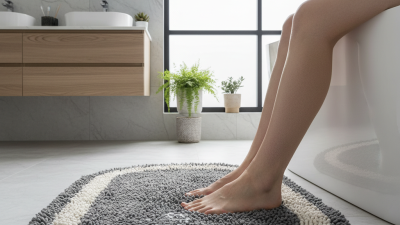
SIMPLE, TRUST, INTROSPECTION MIND, DO 101 POINTS.

Leave Your Message
Buying a Shower Room Rug is not merely a style decision. It affects drying time, underfoot comfort, hygiene, and household safety. Grand View Research and Technavio both identify home-textile demand as increasingly shaped by washable materials, online purchasing, and sustainability concerns. However, their market categories often combine bath mats, rugs, and textile accessories. The figures are useful, but not perfectly comparable. That matters.
Global buyers also face different bathrooms, climates, and standards. A dense cotton rug may feel luxurious in a dry apartment, yet remain damp in a humid coastal home. Microfiber can dry faster, while natural fibers may offer a softer touch. Neither choice is automatically superior. Look closely at absorbency, backing grip, edge construction, colorfastness, machine-wash instructions, and packaging protection. Check product claims against recognized testing or certification records. “Mold is a symptom of a moisture problem,” explains mold specialist Michael Rubino, founder of HomeCleanse. His warning applies directly to rugs placed beside wet shower doors. A rug that stays wet is not a small inconvenience.
This guide, “7 Shower Room Rug Buying Tips for Global Buyers,” translates those practical details into purchasing decisions. It considers bathroom size, regional climate, user safety, fiber selection, maintenance costs, and supplier reliability. It also questions attractive claims that lack measurable evidence. A low price can hide weak backing or expensive replacement cycles. Sometimes, the prettiest option is the wrong one.
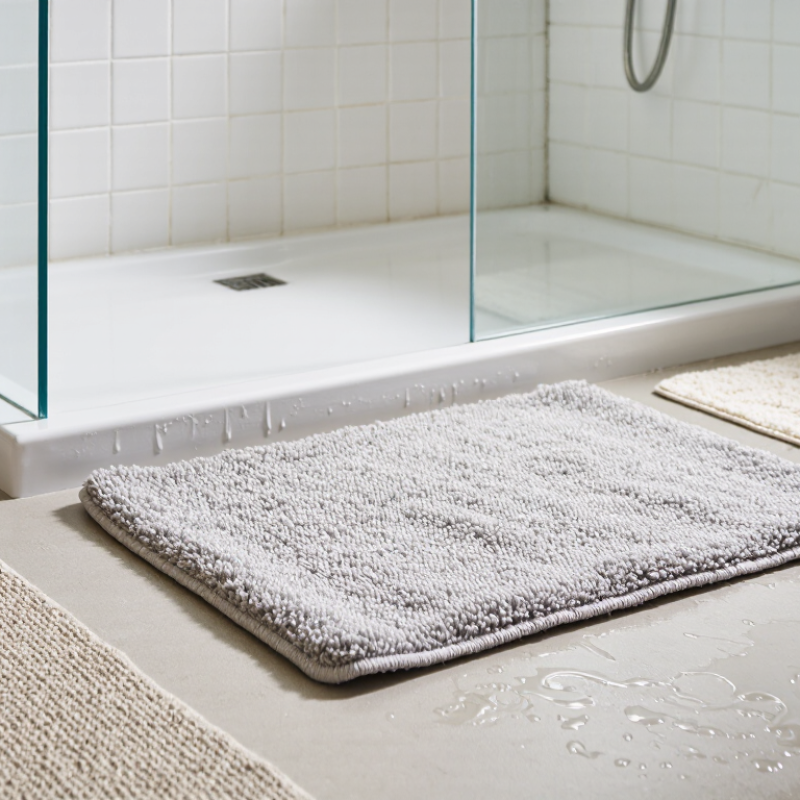
7 Shower Room Rug Buying Tips for Global Buyers
Define the Main Requirements of a Shower Room Rug
A shower room rug must handle water, frequent washing, and constant foot traffic. Start by measuring the available floor space. Leave enough room for doors and drainage. A 50-by-80-centimeter rug may suit a small bathroom, while larger rooms need wider coverage. Check the rug’s thickness too. Excessive thickness can block doors or create a tripping hazard.
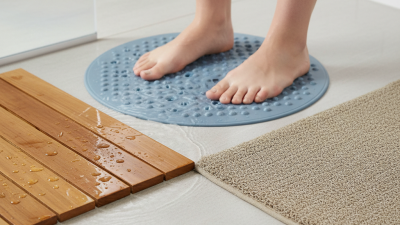
Tip 1: Choose materials according to moisture conditions. Fast-drying fibers help reduce damp smells and mildew risks. A textured surface can improve grip, but it should still feel comfortable under bare feet. The backing needs stability on smooth tiles. However, no backing is permanently slip-proof. Test the rug on the actual floor whenever possible.
Tip 2: Review care requirements before placing a bulk order. Confirm whether the rug is machine washable, dryer-safe, or suitable for air drying only. Ask for washing instructions, colorfastness information, and material details. In my experience, unclear labels often cause avoidable quality complaints. I once underestimated drying time in a humid bathroom. That was a useful mistake. Rugs should also meet the destination market’s applicable safety and textile requirements. Request samples, inspect stitching, and test absorbency before approving production. A simple water-drop test can reveal whether the surface absorbs quickly or leaves water pooling.
| No. | Buying Tip | Main Requirement | Practical Specification | How to Verify | Global Buyer Consideration |
|---|---|---|---|---|---|
| 1 | Choose the Correct Size | The rug should cover the main standing area without blocking the door, drain, or bathroom fixtures. | Common rectangular sizes include approximately 40 × 60 cm, 50 × 80 cm, and 60 × 90 cm. Measure the available floor space before ordering. | Measure the floor area, door clearance, and distance from the shower or bathtub to the vanity. | Offer both metric and imperial dimensions in product specifications because markets use different measurement systems. |
| 2 | Prioritize Water Absorption | The rug should absorb water from wet feet quickly and help keep the surrounding floor dry. | Select absorbent fibers such as cotton, microfiber, or cellulose-based materials. A pile height of about 10–20 mm provides a balance between comfort and drying performance. | Request laboratory absorption results or conduct a controlled water-drop and drying-time comparison using equal-size samples. | Confirm performance after repeated washing, since fiber finish and absorbency can change over time. |
| 3 | Check Slip Resistance | The backing should reduce movement on smooth, wet surfaces such as ceramic tile, porcelain tile, or vinyl flooring. | Use a suitable non-slip backing, such as thermoplastic rubber or latex, and ensure the backing remains flat and flexible. | Ask for slip-resistance test results where available and test the rug on the intended floor type under both dry and damp conditions. | Avoid absolute claims such as “slip-proof.” State that the rug is designed to improve traction and should be placed on a clean, dry floor. |
| 4 | Select a Washable Construction | Frequent washing is necessary because shower room rugs are exposed to moisture, skin oils, soap residue, and dust. | Prefer machine-washable construction with secure edge binding, colorfast fibers, and a backing that does not crack or peel under normal care. | Review care instructions, wash-test samples, and inspect shrinkage, edge fraying, color change, and backing damage after repeated cycles. | List washing temperature, drying method, detergent restrictions, and whether the product is suitable for commercial laundering. |
| 5 | Evaluate Drying and Mold Control | The rug should dry efficiently between uses to limit persistent dampness and unpleasant odors. | Choose a construction with breathable fibers, moderate thickness, and a backing that does not fully seal moisture against the floor. | Compare drying time in a controlled room and check whether the backing traps moisture after the rug is lifted. | For humid regions, recommend hanging or air-drying after use and avoid unsupported “mildew-proof” claims unless verified by testing. |
| 6 | Confirm Material Safety and Comfort | The surface should feel comfortable under bare feet and should not release excessive lint, odor, or irritating residues. | Use clearly identified fibers and colorants. A soft, low-to-medium pile is generally easier to clean than a very deep pile. | Request material composition, colorfastness, odor, and restricted-substance test documentation appropriate for the destination market. | Check applicable chemical regulations and labeling requirements in each import country before mass production. |
| 7 | Balance Durability, Packaging, and Cost | The rug should maintain its shape, absorbency, backing performance, and appearance throughout its expected service life. | Assess fabric density, stitching, edge binding, backing adhesion, weight, folded dimensions, and packaging compression. | Conduct dimensional stability, abrasion, colorfastness, wash-cycle, and packaging-drop checks using pre-production samples. | Calculate landed cost using product price, carton volume, shipping weight, duties, packaging, and expected return or damage rates. |
Note: Performance requirements should be confirmed against the regulations, testing methods, floor types, and consumer expectations of the destination market.