Why Choose Washroom Carpet for Commercial Spaces?
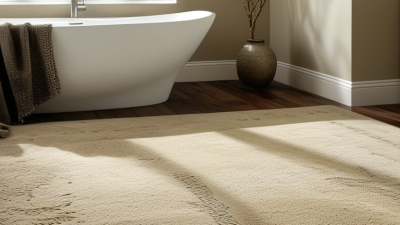
Commercial washrooms face a difficult balance: they must feel comfortable, remain hygienic, and withstand constant moisture, foot traffic, and cleaning. Washroom Carpet can support that balance when it is selected as a technical flooring system, not as a decorative afterthought. Its soft surface can reduce footsteps, improve acoustic comfort, and create a warmer impression in offices, hotels, airports, and retail facilities. That matters because visitors often judge cleanliness through small details, including how a floor looks and feels.
However, carpet is not automatically the safest choice. The U.S. Environmental Protection Agency reports that indoor pollutant concentrations can be two to five times higher than outdoor levels, making ventilation and moisture control essential. Its guidance, Mold Remediation in Schools and Commercial Buildings, repeatedly stresses that persistent dampness can encourage microbial growth. The Carpet and Rug Institute also recommends frequent extraction, rapid drying, and manufacturer-approved cleaning methods for commercial carpet. These are practical requirements, not optional extras.
A well-designed Washroom Carpet should therefore use moisture-resistant backing, dense construction, and clearly defined maintenance routines. Place it away from direct shower spray and leaking fixtures. Use entrance mats to capture water and grit. Inspect seams, edges, and concealed areas regularly. The choice is not perfect. Some facilities may still need resilient flooring near toilets or basins. Yet, with professional installation, documented cleaning, and honest risk assessment, Washroom Carpet can provide comfort without sacrificing responsible facility management.
Commercial Washroom Carpet: Types, Uses, and Water-Zone Boundaries
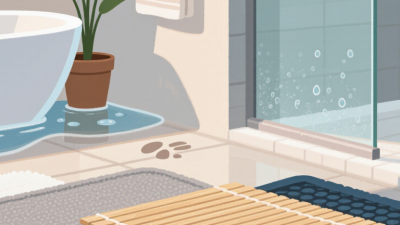
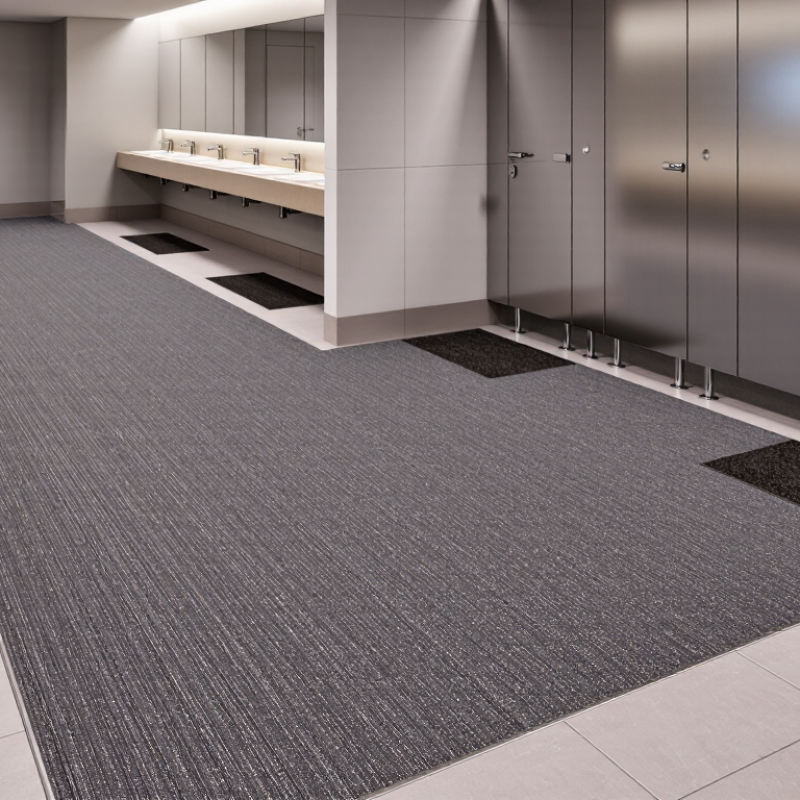
Commercial washroom carpet works best where floors stay mostly dry: entrance corridors, changing areas, and circulation spaces outside showers. It softens footsteps and can reduce the tracked-in grit that scratches hard flooring. The boundary matters. Keep carpet away from shower exits, urinals, and regularly splashed sink fronts, where moisture can linger beneath the surface.
Choose the right construction for each area
Different areas call for different constructions. Dense, low-pile carpet tiles are practical in dry circulation zones because damaged sections can be replaced individually. Solution-dyed synthetic fibers, such as nylon or polypropylene, are often chosen for stain resistance and easier routine cleaning. At entrances, purpose-made absorbent matting can catch water and soil before visitors reach the carpet. It needs frequent inspection, though. A saturated mat is not doing its job.
Map the wet and dry zones before specifying materials. A useful rule is to use washable, slip-resistant hard flooring wherever standing water is expected, then transition to carpet beyond that boundary. Check the subfloor, drainage, and cleaning schedule too; small details can defeat a good product choice. Carpet may feel warmer, but it is not a substitute for drying leaks promptly. And boundaries are rarely perfect. A splash can travel farther than expected, so observe the room during busy hours and adjust the transition if needed.
Slip Safety: OSHA 29 CFR 1910.22 and ANSI A326.3 DCOF ≥0.42 Benchmarks
Why Choose Washroom Carpet for Commercial Spaces?
Washroom carpet can help manage water at entrances and transition zones, where wet shoes leave dark tracks across hard floors. It is not a substitute for drainage, prompt cleanup, or suitable flooring in splash areas. OSHA 29 CFR 1910.22 requires walking-working surfaces to be clean, orderly, and, where feasible, dry. For wet processes, employers must provide drainage and dry standing places where practicable. The rule does not certify carpet as slip-proof.
ANSI A326.3 uses a wet dynamic coefficient of friction (DCOF) of 0.42 as a benchmark for many level interior surfaces expected to be walked on when wet. It is not a guarantee of safety in every condition. The standard notes that contaminants, footwear, wear, and maintenance can affect traction. BLS reported 450,540 workplace injury cases involving falls, slips, or trips in 2022, underscoring why floor conditions deserve routine attention. Carpet may help capture tracked moisture, but saturated or poorly maintained material can create new concerns.
Tips: Place carpet only where it can dry, and inspect edges for curling. Keep a dry route open. Record wet-floor checks during busy periods; small checks can be missed when staff are rushed. Choose products suited to the site’s cleaning plan, and replace damaged sections promptly.
Moisture and Hygiene: IICRC S100 Maintenance and Drying Protocols
Why Choose Washroom Carpet for Commercial Spaces?
Washroom carpet can soften footsteps and reduce the cold, hard feel of tile. In commercial spaces, though, moisture control matters more than appearance. The IICRC S100 standard provides professional guidance for maintaining textile floor coverings. It emphasizes appropriate cleaning methods, trained judgment, and attention to the carpet’s materials and condition. It is not a substitute for a site-specific maintenance plan.
A damp patch near a sink may look minor, yet water can linger beneath the surface. Staff should remove visible moisture promptly, restrict access to affected areas, and arrange suitable extraction and drying. Air movement and dehumidification can help, but equipment placement and carpet construction matter. Drying should be verified, not guessed from a surface that feels dry. If odors or recurring dampness remain, investigate the source rather than masking it. Small details count.
Tips: Blot spills quickly; avoid rubbing them deeper. Keep a simple log of wet incidents and cleaning dates. Check seams, edges, and areas around fixtures during routine inspections. Follow product care instructions, and consult a qualified cleaner when contamination or persistent moisture is present. No schedule fits every washroom. Foot traffic, ventilation, and splash patterns can change the plan.
Lifecycle Costs: 50×50 cm Modular Tiles Reduce Replacement Scope and Downtime
Commercial washrooms see constant foot traffic, splashes, and cleaning. When carpet is suitable for the area, 50×50 cm modular tiles can make repairs more contained. If a tile near a basin becomes stained or damaged, staff can lift that section and replace it rather than remove a larger carpeted area. Less flooring may need replacement, and part of the room may remain open during the repair.
The savings are practical, not automatic. Total lifecycle cost includes replacement materials, labor, cleaning, and the time a washroom is out of service. Keeping a small, labeled stock of matching tiles can help; recording the tile layout and installation details makes later repairs less of a guessing game. The subfloor still needs inspection and drying before replacement. That step takes time, but skipping it can invite recurring problems.
There are limits. Tile systems and adhesives must be selected for the moisture levels and cleaning routines in the specific washroom. Areas with frequent standing water may need a different floor finish. Modular carpet does not fix leaks or poor ventilation. A careful site assessment matters, even when the tiles look simple to maintain.
Why Choose Washroom Carpet for Commercial Spaces?
Lifecycle costs: 50 × 50 cm modular tiles can limit the area affected when localized damage occurs.
Illustrative scenario, not measured industry data: for a 100 m² washroom with damage confined to 1 m², modular replacement affects 1 m² (four 50 × 50 cm tiles); full-floor replacement affects 100 m². Downtime estimates vary by site, preparation, and installation conditions.
Acoustic Performance: ASTM C423 NRC Testing and Product-Specific Data
In a busy commercial washroom, hard surfaces can make hand dryers, footsteps, and conversation sound sharper. Carpet can absorb some reflected sound, but the result depends on the tested product and its installation. ASTM C423 measures sound absorption in a reverberation room. Its Noise Reduction Coefficient, or NRC, summarizes absorption at 250, 500, 1,000, and 2,000 Hz, rounded to the nearest 0.05. It is useful, but it is not a promise of how quiet every washroom will feel. Room size, ceiling height, and other finishes matter too.
Ask for the ASTM C423 report for the exact carpet construction under consideration. Check the face material, pile, backing, and any tested underlay; changing one can alter performance. That detail matters. A general NRC figure without a matching product description is hard to apply with confidence. Also confirm whether the test assembly resembles the planned installation, since adhesive, substrate, and fitting conditions may differ. NRC describes sound absorption, not sound blocking between rooms. A high number alone cannot solve noise travelling through a doorway or partition. There is an awkward trade-off here: acoustic data can guide selection, but it cannot replace a site assessment. Review the report alongside moisture management, cleaning needs, and expected foot traffic before specifying washroom carpet.