SIMPLE, TRUST, INTROSPECTION MIND, DO 101 POINTS.

Leave Your Message
Choosing the right Bathroom Rug involves more than matching colors with ceramic tiles. Global buyers must consider water absorption, drying speed, floor grip, comfort, maintenance, and regional climate. A rug that performs well in a dry hotel bathroom may stay damp in a humid coastal home.
Bathroom textile consultant Elena Marquez explains, “The best rug balances quick drying, secure footing, and realistic daily care.” Her point is practical. Cotton feels familiar and washable. Microfiber dries quickly. Chenille offers soft texture and strong absorbency. Memory foam adds cushioning, but it may need longer drying. Bamboo and teak provide a clean, spa-like appearance, although their slatted surfaces may feel less comfortable.
This guide examines ten Bathroom Rug types for distributors, retailers, hospitality buyers, and household customers worldwide. Each category will be reviewed through material performance, construction quality, cleaning needs, and buyer expectations. Important details include edge stitching, backing stability, pile height, packaging size, and resistance to repeated washing.
Small details matter.
A non-slip backing can reduce movement on smooth tile, but it may lose effectiveness when wet or worn. Diatomite rugs can dry rapidly, yet they may crack under rough handling. Wool feels premium, though it usually demands more careful maintenance. These differences create trade-offs, not perfect solutions.
The ranking may not suit every market. Local humidity, bathroom size, consumer habits, and import requirements can change the best choice. Buyers should test samples before placing large orders. A beautiful rug is not automatically a reliable one. Performance should be measured after repeated use, not only judged from a product photograph.
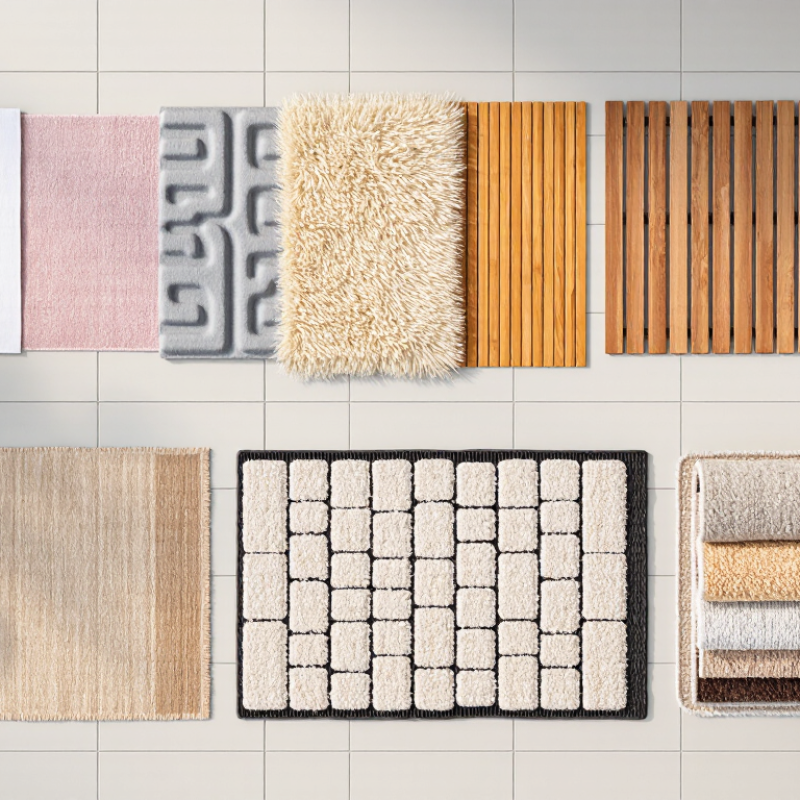
Top 10 Bathroom Rug Types for Global Buyers
Bathroom rugs differ by fiber, pile, backing, and form. Cotton flatweave rugs offer breathable, quick-drying surfaces with low pile and TPR backing. Microfiber chenille rugs feel softer, use a high pile, and often include waterproof PVC backing. Wool tufted rugs provide warmth, medium pile, and cotton backing, but require careful moisture control. Polyester shag rugs create a plush feel with deep pile, rubber backing, and oval or rectangular forms.
Nylon printed rugs have a dense low pile, strong TPR backing, and flexible runner forms. Recycled PET braided rugs use looped fibers, medium pile, and rubber backing, making round designs practical for small spaces. Memory foam rugs combine a polyester cover with a foam core, low surface pile, and full-rectangle forms. Hemp-blend flat rugs use coarse natural fibers, low pile, and fabric backing, though damp rooms may shorten their service life. Contoured polyester rugs fit around toilet bases and usually pair low pile with non-slip backing. Silicone-backed microfiber mats use a soft short pile and waterproof backing, supporting easy cleaning.
Real purchasing checks should include absorbency, drying time, edge stitching, odor, and slip resistance. A rug may pass a factory test yet curl after repeated washing. That detail matters. Buyers should also match fiber and pile to local humidity, washing habits, and bathroom size. High pile feels luxurious, but it can hide moisture underneath. Low pile is easier to clean, though less comforting under bare feet. No single form suits every market.
| No. | Bathroom Rug Type | Primary Fiber | Pile / Surface Structure | Typical Backing | Common Form | Key Functional Characteristics | Best Use | Care Considerations |
|---|---|---|---|---|---|---|---|---|
| 1 | Microfiber Shag Rug | Polyester microfiber | High-pile, dense cut loops or tufted shag | TPR or PVC anti-slip coating | Rectangle, contour, or U-shaped set | Soft hand feel, quick surface drying, and strong water absorption from fine synthetic fibers | Everyday use beside showers, bathtubs, and vanities | Machine wash according to the care label; avoid high heat if the backing is PVC or TPR |
| 2 | Memory Foam Bath Mat | Polyester or nylon surface with polyurethane foam core | Low to medium pile over a cushioned foam layer | PVC or TPR non-slip backing | Rectangle, U-shaped, or pedestal contour | Provides cushioning and pressure relief; the foam core improves comfort when standing | Vanity areas and bathrooms where underfoot comfort is a priority | Dry thoroughly; prolonged moisture can remain inside the foam core; follow washing limits carefully |
| 3 | Chenille Bath Rug | Usually polyester chenille yarn | Tufted or looped pile with raised, cord-like yarns | TPR, PVC, or latex coating | Rectangle, runner, contour, or multi-piece set | Plush texture, good absorbency, and a large surface area for trapping water from wet feet | Family bathrooms and high-traffic residential spaces | Shake or vacuum gently; machine-washable versions should be dried at low temperature |
| 4 | Egyptian Cotton Bath Mat | Long-staple cotton | Looped terry or dense cut pile | Usually cotton-only or a latex-dotted underside | Rectangle, runner, or contour shape | Breathable, absorbent, and comfortable; cotton can absorb substantial moisture without a synthetic coating | Premium residential bathrooms and hospitality-style interiors | Wash before first use if recommended; cotton may shrink and should be dried according to the label |
| 5 | Organic Cotton Bath Mat | Certified organic cotton, commonly terry or woven cotton | Flat-woven, looped terry, or low cut pile | Uncoated cotton or natural latex dots | Rectangle, runner, or simple bath mat | Plant-based fiber, breathable construction, and a soft feel; suitable for buyers prioritizing material traceability | Eco-conscious homes and naturally styled bathroom collections | Check certification and wash instructions; cotton requires complete drying between uses |
| 6 | Bamboo Slat Bath Mat | Natural bamboo slats or bamboo strips | Rigid, open slat surface with minimal or no textile pile | Rubber feet, silicone pads, or anti-slip strips | Rectangular platform or roll-up mat | Allows air circulation beneath the feet and dries quickly because water can drain through the open structure | Well-ventilated bathrooms, saunas, and spaces with hard flooring | Keep slats ventilated; wipe clean and do not leave standing in pooled water |
| 7 | Teak Wood Bath Mat | Teak hardwood | Solid or slatted hard surface with no textile pile | Rubber or silicone anti-slip feet | Rectangular slatted platform | Naturally moisture-resistant hardwood with a stable, spa-like surface and open drainage gaps | Premium bathrooms, wet rooms, and spa-inspired interiors | Wipe dry after use; avoid prolonged immersion and periodically inspect feet and joints |
| 8 | Polyester Flat-Weave Rug | Polyester filament or spun polyester | Flat weave or very low pile | TPR, PVC, or latex backing | Rectangle, runner, or round accent rug | Lightweight, colorfast in many constructions, and easier to place under doors than thick rugs | Compact bathrooms, rental properties, and decorative floor zones | Vacuum or machine-wash when permitted; ensure the backing is fully dry before reuse |
| 9 | Nylon Low-Pile Bath Rug | Nylon, including solution-dyed nylon in some products | Low cut pile, loop pile, or tufted surface | Latex, PVC, or TPR coating | Rectangle, contour, or runner | Resilient synthetic fiber with good abrasion resistance and relatively fast drying at low pile heights | High-traffic bathrooms and commercial or multi-user facilities | Regular vacuuming helps preserve appearance; avoid harsh chemicals that may affect color or backing |
| 10 | Recycled PET Bath Rug | Recycled polyethylene terephthalate, usually from post-consumer plastic | Flat weave, low pile, or tufted pile | TPR, PVC, recycled rubber, or latex-based backing | Rectangle, runner, round, or contour shape | Uses recycled polyester content, resists moisture, and can offer good color and shape stability | Sustainability-focused collections and everyday residential use | Review recycled-content claims and washing instructions; avoid excessive heat during drying |