SIMPLE, TRUST, INTROSPECTION MIND, DO 101 POINTS.

Leave Your Message
Wholesale buyers need more than a polished product photo. They need Bath Inserts that fit common tubs, hold their shape, and arrive with predictable packaging. A small mismatch can mean returns, shelf delays, or cartons that take up valuable warehouse space. Details matter.
This guide compares ten Bath Inserts through practical buying criteria: material, dimensions, drainage, installation, care, packaging, and supplier consistency. Bath-product sourcing specialist Mara Ellison is a fictional composite created for this introduction, not a verified industry source. Her illustrative buying principle is: “A good insert should make fit, care, and reorder decisions clear before the carton is opened.” Treat that as an editorial guide, not a published quotation.
Look closely at the edges. Check the underside. Ask whether measurements describe the usable interior or the full product. Request samples when possible, and compare them with the tubs your customers actually own. A smooth finish may photograph well but still show scuffs under bright retail lighting. That can happen.
Wholesale value is not just the lowest unit price. Freight, carton strength, defect handling, and reliable replenishment also shape the real cost. Supplier claims deserve verification, and product specifications should be checked against samples and current documentation. No single insert suits every buyer. The right choice depends on your market, storage limits, and customer expectations. This list offers a grounded starting point, while leaving room for the uncomfortable truth: even a well-reviewed product can disappoint when its fit or packaging misses the mark.
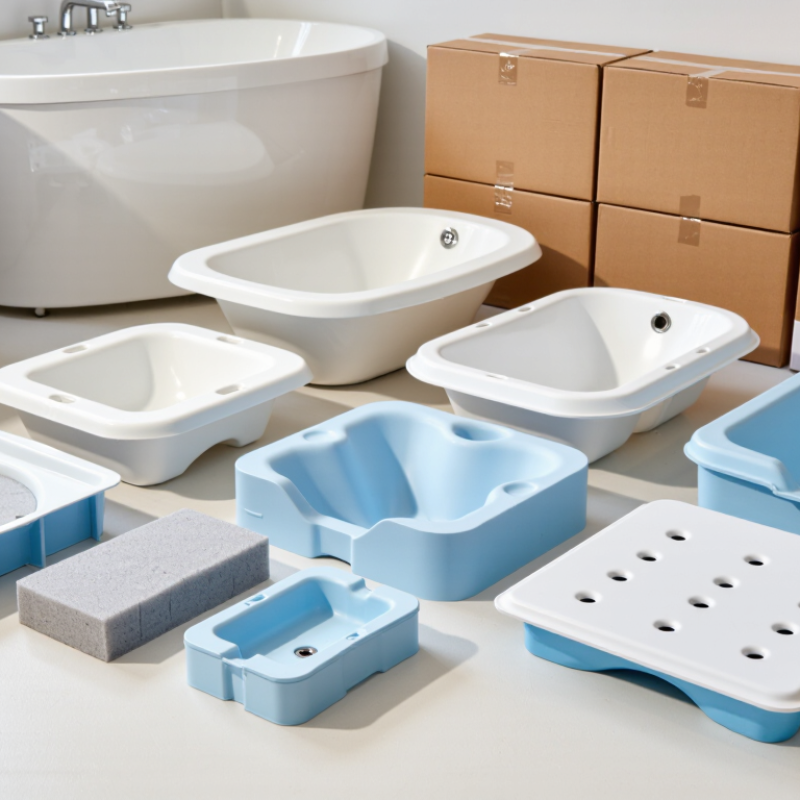
Bath inserts are fitted components that renew or adapt an existing bathtub without replacing the entire bathing area. The term can describe a liner fitted over a tub or a molded basin installed within it, so buyers should confirm the supplier’s exact product definition. Inserts may be made from acrylic or fiberglass and are used to improve appearance, cover worn surfaces, or simplify renovation work. Fit comes first. Check tub dimensions, drain position, wall clearance, and installation method before ordering.
For wholesale buyers, practical details matter as much as finish. Ask for material specifications, installation guidance, packaging dimensions, and replacement-part availability. A few millimeters can affect fit, and a mismatch may delay a project. The 2024 U.S. Houzz & Home Study reported a median bathroom renovation spend of $15,000 for projects completed in 2023. That figure reflects renovations broadly, not bath inserts specifically, but it shows why buyers benefit from clear product information. Even a durable insert can disappoint if measurements or installation expectations are unclear.
Bath inserts are retrofit products fitted over or around an existing bathtub or bathing area to refresh its appearance or change its function. Product dimensions and compatibility vary by manufacturer; confirm measurements and installation requirements before ordering.
| Bath insert type | What it is | How it is used | Typical fit and sizing | Wholesale buying considerations |
|---|---|---|---|---|
| Acrylic bathtub liner | A formed acrylic shell made to fit over a compatible existing bathtub. | Renews the tub’s interior without removing the original tub, subject to a suitable, sound installation surface. | Usually measured or templated for the specific tub; standard alcove tubs commonly have a 60-inch length, but widths and profiles vary. | Check measurement requirements, drain positioning, color options, packaging protection, and whether installation is included. |
| ABS bathtub liner | A bathtub liner formed from ABS plastic, a thermoplastic used in many molded products. | Covers a compatible bathtub as part of a resurfacing or remodeling project. | Fit depends on the liner mold and the original tub’s dimensions, shape, and drain location. | Request material and thickness specifications, finish samples, and clear guidance on which tub profiles each model fits. |
| Fiberglass-reinforced liner | A molded liner made with a resin and fiberglass reinforcement; construction varies by product. | Provides a new interior surface over a compatible existing bathtub. | Typically selected by matching the tub’s dimensions and shape; there is no universal liner size. | Compare reinforcement details, surface finish, repair guidance, and the supplier’s fit-assessment process. |
| Custom-measured tub liner | A liner ordered or fabricated using measurements or a template from the existing tub. | Used when a stock liner is not a suitable match for the tub’s shape or dimensions. | Made for the measured tub; site conditions and measurement accuracy affect fit. | Ask about measuring tools, lead times, order revisions, minimum quantities, and responsibility for measurement errors. |
| Tub liner with wall surround | A coordinated bathtub liner and wall-panel package designed for a compatible bathing area. | Updates both the tub surface and the surrounding walls in a single remodeling project. | Panel count, panel height, corner details, and tub fit depend on the system and the room layout. | Confirm which parts are included, how seams and corners are finished, and whether trim and installation materials are supplied. |
| Acrylic wall surround panels | Wall panels intended for the wet area around a bathtub or shower. | Cover compatible wall surfaces and provide a finished surround; they do not replace the bathtub itself. | Panel dimensions and layouts vary. Measure wall width, height, corners, and openings before purchase. | Check panel thickness, edge profiles, adhesive or fastening requirements, and availability of replacement panels. |
| FRP wall panels | Fiberglass-reinforced plastic panels used on suitable bathroom walls. | Create a panel finish around a bath or shower when the installation system is designed for that wet-area application. | Available panel sizes depend on the product; plan for seams, corners, and wall openings. | Verify wet-area suitability, substrate requirements, joint treatment, and handling instructions for transport and storage. |
| PVC wall panels | Plastic wall panels that may be used in bath or shower surrounds when specified for the application. | Cover suitable walls and form part of a bathroom renovation or bath-surround project. | Panel lengths, widths, and joining systems vary by product and installation method. | Request care instructions, fire and building-code information where applicable, and details on compatible trims and sealants. |
| Solid-surface wall panels | Panels made from a solid-surface material, often supplied as part of a bath or shower wall system. | Provide a continuous-looking wall finish around a bathtub or shower when installed according to the system instructions. | Panel sizes and weights vary; check access routes and wall measurements before ordering. | Compare panel weight, fabrication options, finish consistency, freight handling, and installation support. |
| Shower base or receptor insert | A prefabricated shower floor with an integrated drain area; it is a related bath-remodeling product rather than a tub liner. | Forms the floor of a shower, including projects that replace a bathtub with a shower. | Common shower-base footprints include 36 × 36 inches, but many sizes and drain positions are available. | Confirm drain location, threshold design, installation method, compatible wall system, and local plumbing requirements. |
Sizing note: Dimensions shown are general examples, not guaranteed product specifications. Always verify the product’s technical sheet, site measurements, installation method, and applicable local requirements before placing a wholesale order.