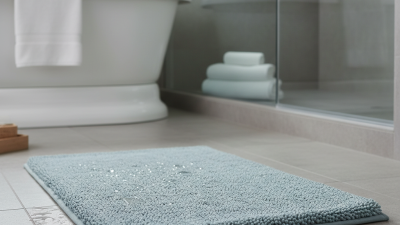
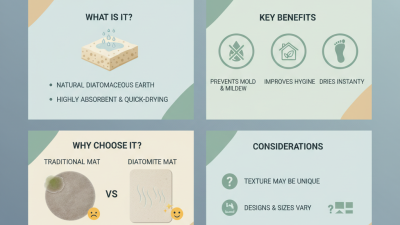
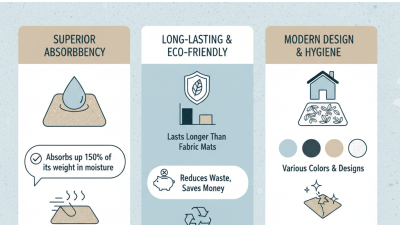
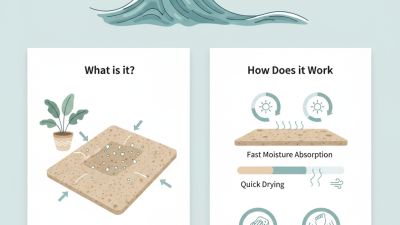
Choosing the best Toilet Mat supplier in China requires more than comparing factory prices. A reliable supplier should provide consistent quality, clear product specifications, and responsive communication. Materials matter. PVC, rubber, microfiber, and diatomaceous options perform differently in wet bathroom environments.
Small details reveal manufacturing standards. Check the mat’s backing, edge finishing, drainage design, and resistance to curling. A sample placed beside a shower can show whether water pools underneath. Ask for test reports, production photos, packaging details, and evidence of quality-control procedures. Certifications may support a supplier’s credibility, but they should be verified carefully. Paperwork alone is not proof.
Samples matter most.
A professional supplier should explain minimum order quantities, customization limits, lead times, and replacement policies without vague promises. Experienced exporters can also manage labeling, carton protection, and shipping documents with fewer surprises. However, no supplier is perfect. A factory may offer excellent materials but slower communication. Another may respond quickly but lack flexible customization. This guide compares these practical differences to identify which Toilet Mat supplier best matches your market, budget, and quality expectations. The final choice should come from documented performance, not attractive claims. Even a polished website can hide inconsistent batches. A thoughtful buyer should test samples, confirm production capacity, and review customer feedback before making a long-term decision.
The best toilet mat supplier offers more than low prices. It provides stable materials, repeatable production, and clear quality evidence. China’s National Bureau of Statistics reported physical online retail sales of RMB 13.02 trillion in 2023, rising 8.3%. This large supply network creates options, but it also makes careful screening necessary.
From practical sourcing experience, ask for samples from different production batches. Check the mat’s backing, edge stitching, absorbency, odor, and drying speed. A useful supplier should explain fiber content and provide test records for colorfastness, shrinkage, and slip resistance. ISO 9001 certification can support process control, but it does not replace product testing. That point is often missed.
Tips: Request three samples, not one. Place them on wet bathroom tiles. Record drying time after ten minutes. Ask whether the quoted price includes packaging and inspection. Also review the supplier’s response speed and corrective-action process. Fast replies look professional, but detailed answers matter more. I would still avoid relying only on catalog photos. They can hide uneven stitching or weak rubber backing. A supplier may seem excellent during sampling, yet perform differently under large-order pressure. Therefore, agree on measurable specifications before production begins.
What Is the Best Toilet Mat Supplier in China?
Chinese toilet mat suppliers commonly provide contour mats, shower mats, rectangular bath mats, and custom floor runners. Key materials include PVC coil, microfiber, chenille, rubber, bamboo, and diatomaceous earth. PVC coil mats drain quickly and tolerate damp bathroom floors. Microfiber and chenille feel softer, absorb water faster, and suit homes with children. Rubber backing improves grip, although poor formulations may produce a strong odor. Diatomite dries rapidly, but it can crack under rough handling. Natural bamboo looks attractive, yet it needs better moisture control.
Mordor Intelligence estimates the global bath mat market at about USD 2.1 billion in 2024. Its report projects approximately 5% annual growth through 2029. Grand View Research also identifies e-commerce and hygiene-focused products as important market drivers. These figures support demand for flexible Chinese production. However, market definitions differ between reports. Buyers should not treat every forecast as universal.
A reliable supplier should provide material specifications, production samples, and test reports for slip resistance, colorfastness, odor, and backing adhesion. Ask for washing tests, not only showroom photos. A thicker mat is not always better. Dense fibers can dry slowly in humid bathrooms. During sourcing, compare edge stitching, drainage speed, packaging compression, and sample consistency. Small defects often appear after repeated washing. That detail deserves attention. Supplier audits and batch inspections remain useful, even when the first sample looks excellent.
A practical comparison of common toilet mat products, materials, construction methods, and performance characteristics
| Product Category | Main Material | Typical Construction | Key Advantages | Common Limitations | Recommended Use | Typical Care |
|---|---|---|---|---|---|---|
| PVC Coil Mat | Flexible PVC | Open-looped or perforated PVC surface with a flexible, non-slip base | Good drainage, easy to rinse, resistant to frequent moisture exposure, and suitable for cut-to-size production | Can retain dirt in the loops; may become harder in low temperatures or under prolonged sunlight | Public restrooms, shower areas, gyms, and commercial washrooms | Shake, vacuum, or hose down; allow to dry fully |
| TPR or Rubber Toilet Mat | Thermoplastic rubber or synthetic rubber | Molded textured surface, often with drainage holes and a slip-resistant underside | Flexible, water-resistant, cushioning underfoot, and generally easy to wash | Rubber odor may be noticeable in some products; quality varies with formulation and additives | Bathrooms, toilets, laundry rooms, and areas requiring strong floor grip | Wash with mild detergent; avoid harsh solvents and prolonged heat |
| Microfiber Shag Mat | Polyester or polyamide microfiber | Dense cut-pile or chenille-like fibers attached to a coated or rubberized backing | Soft feel, good water absorption, quick visual refresh, and broad color customization | Requires regular laundering; thick pile can dry more slowly than flat mats | Residential bathrooms, hotels, apartments, and hospitality interiors | Machine wash according to care instructions; air dry or tumble dry on low heat |
| Cotton Toilet Mat | Cotton, sometimes blended with polyester | Woven, tufted, or looped textile surface with an optional anti-slip backing | Natural hand feel, comfortable underfoot, washable, and suitable for home textile collections | Absorbs moisture for longer; may shrink or lose shape if washed or dried improperly | Households, guest bathrooms, and coordinated bath textile sets | Wash with similar colors; dry completely to reduce odor and mildew risk |
| Diatomaceous Mineral Bath Mat | Porous mineral composite, commonly based on diatomaceous earth | Rigid or semi-rigid absorbent board with a textured surface | Rapid surface moisture absorption, low textile lint, and a minimalist appearance | Can crack if dropped; requires a level floor and careful handling during transport | Dry residential bathrooms and modern interior spaces | Wipe or lightly sand the surface when needed; keep the underside dry |
| PVC Foam Mat | Expanded PVC foam | Closed-cell or semi-closed-cell foam with a printed, embossed, or textured top layer | Lightweight, water-resistant, cushioned, and available in various shapes and surface patterns | Edges may curl if rolled for long periods; surface can wear with abrasive cleaning | Home bathrooms, rental properties, and budget-oriented product ranges | Wipe or rinse with mild soap; store flat when possible |
| Polyester Printed Mat | Polyester fabric with PVC, TPR, or latex backing | Printed or digitally printed textile face laminated to an anti-slip base | Supports detailed graphics, seasonal designs, private-label packaging, and coordinated collections | Absorption and colorfastness depend on fabric density, dye system, and backing quality | Retail collections, promotional programs, and customized home décor ranges | Follow the supplier's washing and color-care instructions |
When evaluating a Chinese toilet mat supplier, I start with the product, not the catalogue. A reliable factory should provide fiber composition, backing material, weight, size tolerance, and batch records. I request samples from different production days. The mat should lie flat, recover after bending, and resist color transfer after washing. For bathroom use, I check wet-floor slip performance, edge curling, odor, and shedding under repeated abrasion. These simple tests expose weaknesses that glossy photographs hide. ISO 105 methods can support colorfastness checks, while slip testing should match the intended floor surface.
Safety evidence needs more than a printed certificate. Ask for recent third-party reports covering restricted substances, formaldehyde where relevant, heavy metals, and phthalates in PVC or rubber backing. Requirements should match destination-market rules. The 2023 WHO/UNICEF Joint Monitoring Programme report estimated that 3.5 billion people lacked safely managed sanitation. That statistic concerns infrastructure, not mats. It still shows why cleanable, durable bathroom products matter. The ISO Survey 2022 recorded more than 1.2 million ISO 9001 certificates worldwide. Yet ISO 9001 proves process control, not automatic product safety. I would verify certificate scope, factory address, audit date, and laboratory accreditation. One uncomfortable lesson: supplier paperwork can be genuine and still incomplete. Factories may control bulk production differently from samples. So I keep retention samples, define acceptance limits, and inspect cartons before shipment.
A reliable toilet mat supplier should offer clear pricing, practical customization, and flexible minimum order quantities. In my sourcing experience, the lowest quote is rarely the best value. Ask whether the price includes material, backing, edge finishing, packaging, and export preparation. A detailed quotation makes hidden costs easier to detect. Compare samples before comparing numbers.
Customization may include dimensions, colors, surface textures, logos, labels, and retail packaging. Simple color changes usually cost less than new molds or complex artwork. Some suppliers charge sampling or tooling fees, then refund them after a confirmed order. Confirm the sample approval process in writing. Small details matter, such as whether the mat lies flat on a bathroom floor.
Tips: Request three quotations with identical specifications. Ask for the material composition, weight, absorbency, backing type, and carton size. Clarify whether the minimum order applies per design, color, or total quantity. A supplier may accept a small trial order, but the unit price can increase. That trade-off is normal. However, unclear answers are a warning sign. I once underestimated packaging volume, and the shipping estimate changed sharply. Recheck carton measurements before payment. Supplier reliability should be judged through samples, inspection records, production photos, and consistent communication, not promises alone.
What Is the Best Toilet Mat Supplier in China?
How to Select the Right Toilet Mat Supplier for Your Business
Selecting a toilet mat supplier in China should begin with your product needs, not the lowest quotation. Define the target size, material, absorbency, backing, color, and washing method. A hotel bathroom may need fast drying and strong anti-slip performance. A household retailer may value soft texture, compact packaging, and attractive colors. During my sourcing experience, sample testing exposed differences that photographs could not show. Edges curled. Some mats released a strong odor after washing.
Request samples from several factories and test them under similar conditions. Pour measured water onto each mat, then check drying time, surface stability, and backing adhesion. Wash samples repeatedly. Inspect stitching, printing, thickness, and color consistency after drying. Ask for material specifications, inspection records, production capacity, and realistic lead times. A professional supplier should explain limitations clearly instead of promising everything. That honesty matters.
Visit the factory when possible, or arrange a documented third-party audit. Review raw material storage, cutting areas, packing lines, and final inspection procedures. Confirm how defective pieces are recorded and replaced. Discuss carton strength, moisture protection, labeling, and shipment quantities before placing an order. Certifications can support credibility, but they do not replace practical testing. I once relied too heavily on paperwork and overlooked uneven packaging. That mistake increased handling time. Supplier selection is rarely perfect; regular review keeps small quality issues from becoming expensive returns.
A practical supplier evaluation framework based on the procurement factors most relevant to toilet mat buyers: product quality, compliance, customization, delivery reliability, order flexibility, and total cost.
Product quality and compliance should receive the highest weighting because they directly influence durability, user safety, and retail acceptance. Cost remains important, but selecting a supplier only by the lowest price may increase returns, quality issues, and delivery risks.