Best Cheap Indoor Door Mats for 2026 Which One Should You Buy?
When choosing a Cheap Indoor Door Mat, homeowners often seek both affordability and quality. According to a recent market report by Statista, the indoor mat industry is projected to grow significantly, reflecting the rising consumer demand for practical home solutions. However, not all mats deliver on their promises of durability and performance.
"Finding the right balance between price and quality is crucial," states Robert Anderson, a leading expert in home textiles. His insights highlight how often consumers settle for less, compromising on essential features like absorbency and non-slip backing. This can lead to purchasing mats that wear out quickly or fail to keep homes clean.
The ideal Cheap Indoor Door Mat should be functional and appealing. Paying attention to material and design can make a significant difference. While affordable options exist, it is important to remember that low price does not always equal poor quality. Engaging with consumer reviews can reveal the strengths and weaknesses of different products. Evaluating your choices thoughtfully will ensure you make a sound investment for your home.

Understanding the Importance of Indoor Door Mats for Your Home
Indoor door mats serve a crucial purpose in maintaining a clean and welcoming home. They act as the first line of defense against dirt, moisture, and allergens. According to a study by the National Center for Healthy Housing, almost 50% of allergens in homes come from outdoor sources. This highlights the importance of having effective mats at entry points.
Choosing the right indoor door mat can significantly reduce the amount of dirt tracked inside. A report from the Institute of Inspection, Cleaning and Restoration Certification suggests that a well-placed mat can capture up to 80% of outdoor dirt. This can lead to less frequent cleaning, ultimately saving time and effort. However, not all mats perform equally. Some may wear quickly or fail to absorb moisture properly, causing more issues.
Moreover, aesthetic considerations are important. An unattractive mat can detract from your home's decor. Balancing functionality and design can be challenging. An ideal mat should fit both the practical needs and the style of the entrance. Thus, investing time into selecting the right mat could enhance your home’s cleanliness and appeal.
Best Cheap Indoor Door Mats for 2026
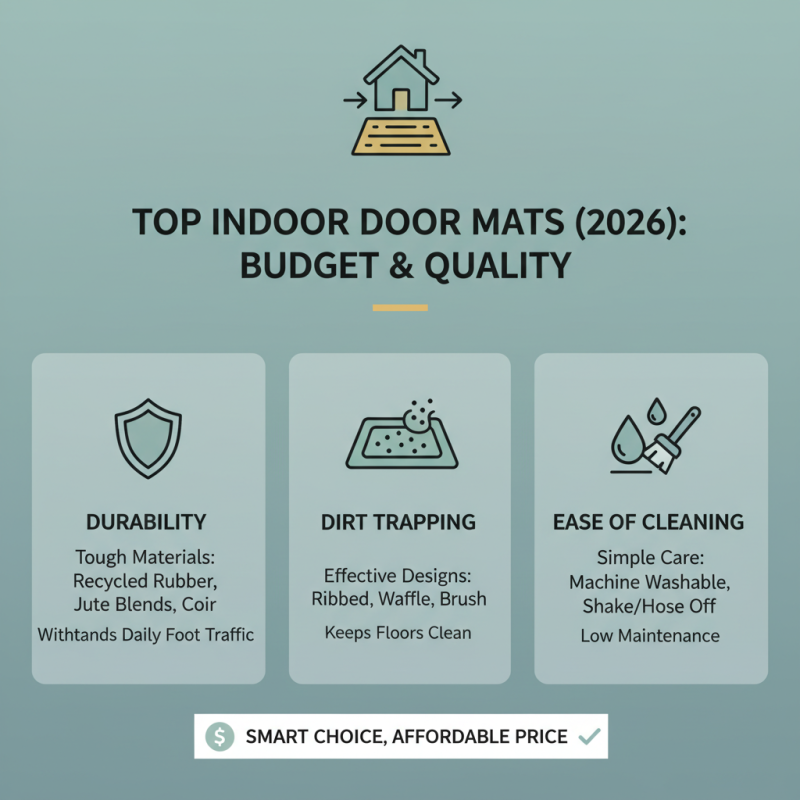
Indoor door mats play a vital role in maintaining cleanliness and style in your home. The chart above illustrates the importance of various factors when selecting the best cheap indoor door mats for 2026, highlighting durability as the top consideration.
Key Features to Look for in Affordable Indoor Door Mats
When choosing affordable indoor door mats, key features are crucial.
A good mat should effectively trap dirt and moisture. According to industry reports, mats with a high pile density capture more debris. Look for options that feature
rubber backing. This helps prevent slipping and extends the mat's lifespan.
Another important aspect is material.
Polyester and nylon are common choices for budget mats. These materials dry quickly and resist stains. Interestingly, studies show that mats made from recycled materials perform
quite well too. They can be eco-friendly without sacrificing quality.
Lastly, consider the mat's size and shape. A larger mat often covers more area, making it more effective. Many households underestimate the space needed.
The right fit can make a significant impact on cleanliness. Be mindful, sometimes cheaper options can lack durability.
An ill-fitting or weak mat may lead to more frequent replacements. This could negate any initial savings, leading to regret.
Top Budget-Friendly Indoor Door Mats for 2026
Choosing the right indoor door mat can be challenging, especially on a budget. In 2026, there are many options that balance affordability and quality. Look for mats made from durable materials that can withstand daily foot traffic. A good mat should trap dirt while being easy to clean.
When selecting a mat, consider the size. An overly small mat may not fit the space well, leading to dirt spreading. A larger mat can cover more ground, which reduces cleaning frequency. Also, think about the texture. Some mats are designed to scrape dirt, while others focus on comfort.
Tips: Always check for slip-resistant features. A mat that moves can cause accidents. Also, choose a color that matches your home décor. While a bright color seems attractive, it might show stains quickly. Reflect on your choices and how they fit into your daily routine. A well-chosen mat brings both style and functionality to your entryway.
Comparative Analysis of Materials Used in Indoor Door Mats
When choosing indoor door mats, the material plays a crucial role. Fibers like nylon and polyester are common. They are durable and often resistant to stains. However, they may not absorb moisture well. If your area experiences heavy rain, consider cotton mats. They are highly absorbent but can wear out quickly.
Natural materials, such as coir and jute, offer a rustic touch. Coir is made from coconut husks and is tough, but the rough texture might not be ideal for all users. Jute is softer but can be less durable in high-traffic areas. Be mindful that natural materials require more maintenance. They can trap dirt, leading to an accumulation of grime over time.
Other options include rubber and vinyl. These materials are waterproof and easy to clean. However, they may lack the aesthetic appeal of fabric mats. They can also be slippery when wet. It's essential to think about how each material fits your needs and lifestyle. Sometimes, the best choice may not seem perfect at first glance.
Caring for and Maintaining Your Indoor Door Mats for Longevity
Maintaining indoor door mats is essential for their longevity. Regular cleaning can prevent dirt build-up and improve their appearance. Depending on the material, some mats can be machine washed. Always check the care label for guidelines. If the mat is not machine washable, a vacuum can do wonders for surface dirt. A good shake outdoors can also help.
Consider the environment where the mat is placed. High-traffic areas may require more frequent care. Sometimes, a quick wipe down with a damp cloth is enough. Water and mud can easily damage mats if left unattended. Watch for wear and tear. Early detection can prevent larger issues later.
Mats can fade over time. Using a mat protector can extend their look. Rotating the mat every few months can also help distribute wear evenly. These small steps can make a noticeable difference. Be proactive about maintenance, even if it feels tedious. Regular care can save money in the long run.
Best Cheap Indoor Door Mats for 2026
| Mats Type |
Material |
Size (inches) |
Price ($) |
Durability Rating (1-5) |
Ease of Cleaning |
| Coir Mat |
Natural Fiber |
18 x 30 |
20 |
4 |
Vacuum & Shake |
| Rubber Mat |
Rubber |
24 x 36 |
25 |
5 |
Wipe & Hose |
| Microfiber Mat |
Microfiber |
20 x 32 |
15 |
4 |
Machine Washable |
| Indoor Carpet Mat |
Synthetic Fiber |
18 x 30 |
30 |
3 |
Vacuum Regularly |
| Bamboo Mat |
Bamboo |
24 x 36 |
35 |
4 |
Wipe Clean |